
What Is Alopecia? Beginner FAQ Guide to Types, Causes, Signs & Treatment
 September 16, 2026
Views: 420
September 16, 2026
Views: 420
Hair loss is hard to understand. More hair on the brush, widening part, smaller ponytail, or even a bald spot may seem strange. But once you see it, you think - is this normal hair loss or alopecia?
If you are trying to find out the answers, you are not alone. There are lots of different reasons for hair loss, and all kinds of alopecia may look differently.
Here is an introductory guide on alopecia with answers to the most frequently asked questions about alopecia – what is it, what are its causes, first symptoms, treatment, and whether wigs or hair toppers may be helpful.
Medical note: this article provides information of educational purpose and not a diagnostic one. In case of sudden, patchy, painful or fast-progressing hair loss, consultation of a dermatologist or another specialist will help to diagnose the cause.
What Is Alopecia?
Alopecia is the name for hair loss used by medicine. It describes temporary or permanent hair loss from the scalp or other body areas. Alopecia can develop due to genetics, changes in immune system, hormones, diseases, medicines, stress or frequent hair pulling. The reason is important because there are various approaches to the treatment.
| Type | What it usually looks like | Can hair grow back? |
| Alopecia areata | Round or patchy bald spots | Sometimes, yes |
| Female pattern hair loss | Gradual thinning, often around the part | Often needs treatment |
| Telogen effluvium | Increased shedding all over the scalp | Often, yes |
| Traction alopecia | Hair loss around areas pulled repeatedly | Depends on damage |
| Frontal fibrosing alopecia | Receding hairline, sometimes eyebrow loss | Can become permanent |
| Alopecia totalis | Loss of all scalp hair | Regrowth varies |
| Alopecia universalis | Loss of hair across the body | Regrowth varies |
The American Academy of Dermatology notes that alopecia areata, female pattern hair loss, frontal fibrosing alopecia, and traction alopecia are among the recognized forms of hair loss.
What Are the Different Types of Alopecia?
There is no single “alopecia look.” Some types happen suddenly, while others develop slowly over years.
1. Alopecia Areata
The cause of alopecia areata is the immune system attacking the hair follicles.
The condition can affect hair all around the body, including the scalp, eyelashes, eyebrows, beard, and any other part of the body that has hair follicles. More severe forms of the disease can lead to complete hair loss from the scalp or body hair loss.
2. Female Pattern Hair Loss
Female pattern hair loss is one of the most common reasons for hair loss in women.
An early symptom of the condition includes a wider part in the middle of the head. Also, the hair at the top of the scalp can thin, while the ponytail becomes smaller.
According to the AAD, the condition is affecting millions of women and typically occurs in the middle ages, although sometimes it can start even earlier.
3. Telogen Effluvium
Telogen effluvium leads to increased hair shedding rather than hair loss in one spot.
This condition can occur after stress, illness, injury, surgery, pregnancy, weight loss, and other changes in the body. It can take several months before hair shedding occurs after the triggering event.
4. Traction Alopecia
The second type results from constant pulling on the hair strands.
Ponytail, tight braid, cornrows, hair extensions, and many other hairstyles that continuously exert pressure on hair follicles can lead to alopecia traction. If this goes on for a long period of time and causes follicle damage, then hair loss will be permanent.

What Are the Causes of Alopecia in Women?
There are a lot of reasons for alopecia in women; thus, it may not be possible to find out its cause based on the appearance of your hair alone.
Common causes include:
Genetics or family history
Hormonal changes
Female pattern hair loss
Autoimmune conditions
Physical or emotional stress
Pregnancy or postpartum changes
Thyroid problems
Iron or other nutrient deficiencies
Certain medications
Chemotherapy or radiation
Tight hairstyles
Rapid weight loss
Some scalp conditions
For example, female pattern hair loss is strongly linked to genetics, and hormones may also play a role.
Alopecia areata is different. It happens when the immune system attacks the hair follicles. This is why guessing the cause based only on how much hair you lose can be difficult.
The same amount of hair loss can have very different causes.
What Are the Early Signs of Alopecia?
Early signs depend on the type of alopecia you have.
Some of the most common signs include:
A wider hair part
A smaller or thinner ponytail
More hair than usual on your pillow or brush
Visible scalp through the hair
Round bald patches
Thinning around the temples
A receding hairline
Loss of eyebrows or eyelashes
Sudden heavy shedding
Hair breaking more easily
The AAD lists increased shedding, visible scalp, thinning areas, and bald patches among signs that can indicate hair loss.
One useful clue is speed.
| Pattern | What it may suggest |
| Gradual thinning over months or years | Female pattern hair loss |
| Sudden round bald patch | Alopecia areata |
| Heavy shedding after a stressful event | Telogen effluvium |
| Thinning where hair is pulled | Traction alopecia |
| Receding hairline + eyebrow loss | Frontal fibrosing alopecia |
However, this table should not serve as a diagnosis. Another disease is female pattern hair loss which can be defined as alopecia as well.
It is normal to lose some amount of hair every day. As stated by the Cleveland Clinic, healthy individuals usually shed 50 to 100 hairs each day in the course of the normal hair growth cycle.
That is why finding hair in the shower can hardly be the sign of alopecia.
The question is:
Are you losing more hair than growing or the other way around?
Is Alopecia Re-Growing Possible Without Medical Treatment?
Yes, sometimes it can happen. However, this is applicable in some instances.
For instance, there are some cases of alopecia areata where hair regrowth happens even without treatment. According to AAD, people with only one or two patches of alopecia areata that have been there for up to a year can be allowed to wait and see if the hair grows back.
Temporary hair loss can also improve after the underlying trigger is gone.
This can happen with some cases of:
Telogen effluvium
Postpartum hair shedding
Hair loss after illness
Some stress-related shedding
Still, some forms of hair loss require medical attention as the hair gets thinner over time.
For instance, female pattern hair loss will worsen with time without any treatment.
Thus, it is more important to determine the cause than wait for your hair to grow back.
Is Alopecia Permanent or Temporary?
Alopecia may be both permanent and temporary.
There is no single answer because “alopecia” covers many different conditions.
| Hair loss type | Usually temporary or long-term? |
| Telogen effluvium | Often temporary |
| Some alopecia areata | Hair may regrow |
| Female pattern hair loss | Usually progressive without treatment |
| Traction alopecia | May improve if caught early |
| Scarring alopecia | Can cause permanent loss |
Scarring forms of hair loss can permanently damage the follicle. Once a follicle is destroyed, it cannot produce normal hair again.
This is another reason why early medical evaluation matters.
The AAD recommends finding the cause of hair loss as early as possible because treatment or prevention is generally more helpful when started earlier.
Can Stress Cause Alopecia?
Stress can be connected to some forms of hair loss, but stress is not the explanation for every case of alopecia.
One common example is telogen effluvium. A major physical or emotional stress can push more hair follicles into a resting phase. The extra shedding may become noticeable a few months later.
Stress can also contribute to alopecia areata in some people. Nevertheless, since alopecia areata is an autoimmune disorder, it would be wrong to claim that stress alone causes this condition.
Possible stressors include:
Major illness
Surgery
Rapid weight loss
Emotional stress
Poor
Significant life changes
If you see sudden shedding, it is better to determine its true cause than assume, ”It is surely stress.”
Treatments for Alopecia: What Are They?
There is no standard treatment for different types of alopecia.
Treatment of alopecia is based on the reason behind the condition, the amount of hair loss, the rate of hair loss, and the condition of hair follicles.
Common approaches may include:
Minoxidil
Minoxidil is commonly used for female pattern hair loss. The AAD notes that both 2% and 5% minoxidil products have been approved for treating female pattern hair loss in women.
Corticosteroids
For some people with alopecia areata, dermatologists may use corticosteroids. These can be applied to affected areas or injected into patches.
The AAD reports that in one study of 127 people with patchy alopecia areata, more than 80% of those receiving corticosteroid injections had at least half of their hair regrow within 12 weeks.
JAK Inhibitors and Other Prescription Treatments
People with more extensive alopecia areata may have additional prescription options, including certain JAK inhibitors.
Which treatment is appropriate depends on the person’s condition and medical history.
Treating the Underlying Cause
If hair loss is related to a thyroid problem, nutrient deficiency, medication, illness, or another health issue, treating the underlying problem may be an important part of the plan.
Hair Replacement Options
Medical treatment is not the only way people manage the appearance of hair loss.
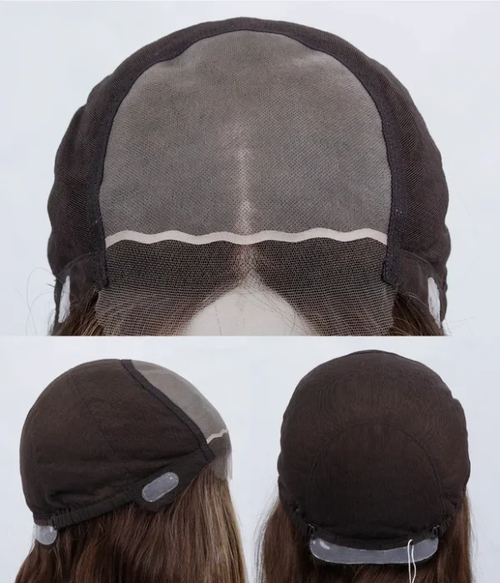
Hair toppers, wigs, and hair pieces can serve as a quick way of covering hair loss while you wait for the results of your treatment or choose what fits you. Hair toppers, wigs, and hairpieces are among the solutions suggested by the AAD.
Can Wigs or Hair Toppers Help With Alopecia?
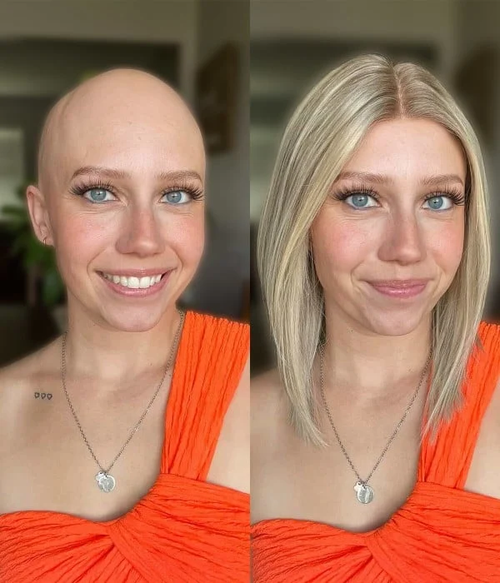
Yes. Hair toppers for women can help cover visible hair loss and create the appearance of fuller hair, but they do not treat the medical cause of alopecia. They can be especially useful for women who still have some natural hair but are experiencing thinning around the part, crown, or top of the scalp.
The right option depends on where your hair is thinning and how much coverage you need.
A hair topper may work well when:
Hair is thinning mainly around the part
The crown looks less dense
The top of the scalp needs extra volume
You still have enough natural hair to secure the topper
You want to blend the added hair with your own hair
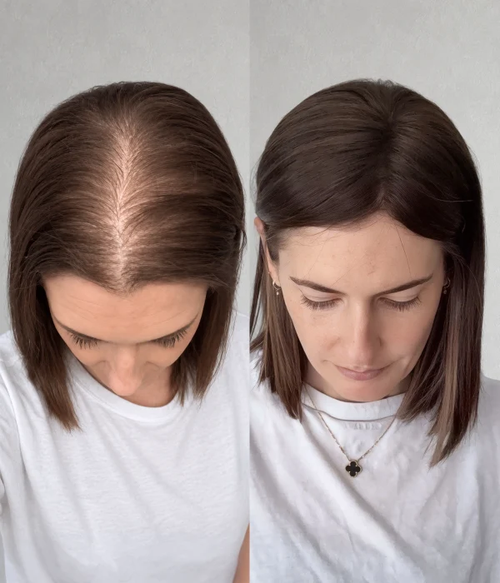
For example, a smaller topper may be enough for mild thinning around the part, while a larger base may offer more coverage for wider areas.
A wig may be better when:
Hair loss affects most of the scalp
There is very little natural hair left
You want full-head coverage
Alopecia causes extensive or complete scalp hair loss
The AAD notes that wigs and hairpieces can be used to hide scalp hair loss, including for people with extensive alopecia areata.
And for the person undergoing such an unpleasant experience, it goes beyond just a question of looks.
By wearing a topper or wig, it will become much easier for you to get yourself ready for work or an outing with friends, attend some event, or simply look into the mirror without fear.
It is not an ”either/or” decision.
You can both resort to medical help and wear a topper or wig simultaneously.
When to Visit a Doctor Due to Hair Loss?
It is not necessary for you to go into panic every time you see a few strands of hair fall off.
But sudden or unusual hair loss deserves attention.
Consider talking with a dermatologist if you notice:
Sudden bald patches
Rapidly increasing shedding
A quickly widening part
Eyebrow or eyelash loss
Scalp pain, itching, redness, or scaling
Hair loss that keeps getting worse
Hair loss after starting a medication
Hair loss together with other health changes
You might undergo a physical examination of your scalp and hair, answer some questions regarding your medical and family histories, and be asked to undertake blood testing or a scalp biopsy.
But first and foremost, it is necessary to figure out the reason behind hair loss.
Hair loss can be difficult, but you have options. While medical treatment focuses on the cause, wigs and hair toppers can help you manage the appearance of hair loss and feel more confident in daily life. Whether you need a little extra coverage or full coverage, the right hair solution can help you feel more like yourself again.
Leave a reply