
UniWigs Hair Topper Length Guide: Live Comparison & Real Customer Pictures
 June 29, 2026
Views: 1520
June 29, 2026
Views: 1520
Finding the appropriate length of hair toppers is probably the most crucial step towards achieving the natural look. The wrong length can make the blend unnatural. This guide will give you insight into the real lengths of hair toppers (12”, 14”, 16”, 18”, 20”) explained and compared by simple terms and visual examples of how customers wear their toppers.
What is a Hair Topper Length and why does it matter?
A hair topper length refers to the measured length of hair strands from the base to the ends of the topper. It directly affects how natural the topper blends with your own hair. Choosing the right length helps create a smooth transition between your bio hair and the topper, making the result look realistic, soft, and balanced.
In simple terms: the right length = natural blend + easier styling + better confidence.
How do I choose the right hair topper length for my natural hair?
A hair topper is a partial hairpiece designed to cover thinning areas on the top of your head while blending with your own hair. For people using hair toppers for thinning hair, The best length depends on your natural hair length, styling habits, and desired final look.
A simple rule is:
Match your topper to your natural hair length
OR choose 1–2 inches longer for blending flexibility
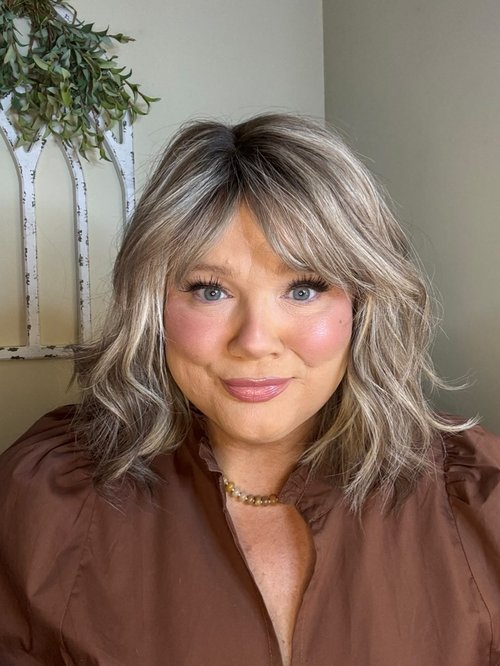
The hair topper length can be defined as the distance between the place where the hair topper is attached to the head and its hair ends. It helps to determine the way in which the hair topper fits into your hair, and the way in which it will look like.

Closed Lace | 8.5” x 9” Breeze | Ultra-breathable Human Hair Topper | Ponytail Topper| Low Density in 14"
What does 12”, 14”, 16”, 18”, and 20” look like in real life?
Hair length can look very different once worn, because of body shape, layering, and texture. Below is a real-world visual guide based on straight hair appearance.
| Length | Real-life position on body | Best for |
| 12” | Chin to shoulder | Short hair / bob styles |
| 14” | Shoulder to collarbone | Natural everyday look |
| 16” | Below shoulder | Most popular blending length |
| 18” | Mid-back | Longer, fuller styles |
| 20” | Lower back | Glamorous long hair look |
Hair often looks 1–2 inches shorter when wavy and up to 3 inches shorter when curled due to natural shrinkage.
So:
16” wavy ≈ 14–15” visible length
18” curled ≈ 16–17” visible length
Will a longer topper look too heavy or unnatural?
Not necessarily. A longer topper can look very natural if chosen correctly, but balance matters.
A longer topper may look unnatural if:
Your natural hair is much shorter than the topper
Density is too high for your hair type
There is no layering or blending cut
A longer topper works well when:
You want volume + length together
Your stylist trims layers into your natural hair
You use medium density (not overly thick)
Rule of thumb:
A topper that is 2–4 inches longer than your bio hair still blends naturally in most cases.
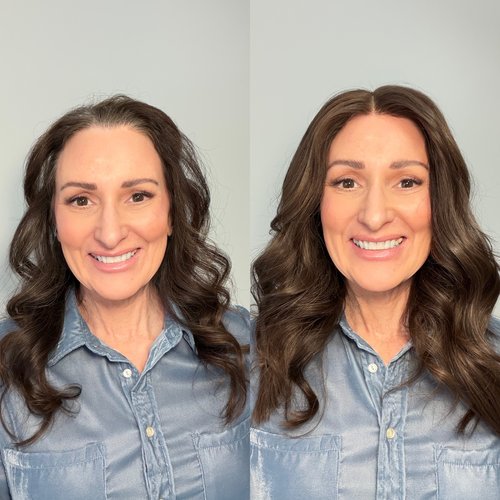
Closed Lace | 8.5” x 9” Breeze | Ultra-breathable Human Hair Topper | Ponytail Topper| Low Density in 16"
Will curled or styled hair make the topper appear shorter?
Yes. This is one of the most important things buyers often miss.
Curling or waving hair reduces visible length because the hair lifts upward instead of falling straight down.
| Style Type | Length Appearance Change |
| Straight | Full true length visible |
| Loose waves | 1–2 inches shorter |
| Tight curls | 2–4 inches shorter |
Example:
A 16” straight topper may look like a 14” wavy style
An 18” curled topper may appear like a 15–16” length
This is why many stylists recommend choosing slightly longer lengths if you plan to curl your hair often.
How do I make my topper blend naturally with my own hair length?
Blending is more important than length itself. Even the perfect size can look unnatural if blending is not done properly.
Here are proven methods:
1. Match the ends, not the roots
Your topper should match your mid-lengths and ends, not your root color or shortest layer.Ask for a light haircut
2. A stylist can:
Add soft layers
Remove blunt edges
Shape topper + natural hair together
3. Use the “1–2 inch blend rule”
Keep topper slightly longer so your natural hair can blend upward into it.
4. Style together
Curl both topper and natural hair together
Avoid separate styling for a seamless finish
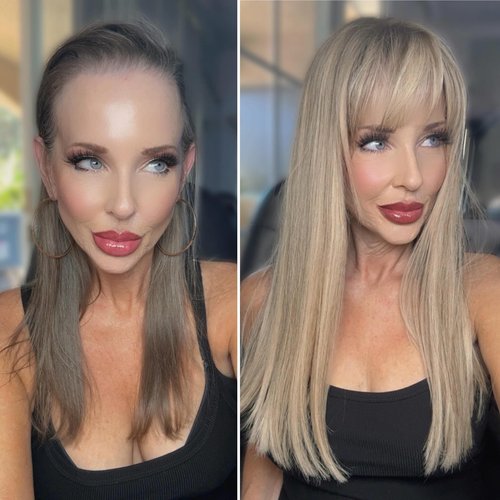
6”x6” Amber | Silk Top Remy Human Hair Topper with Bangs in 18’’
Should I choose shorter or longer length if I’m between two options?
If you are unsure between two lengths, the safest choice is usually longer.
Why longer is better:
Can always be trimmed
Allows styling flexibility
Supports natural hair growth over time
Prevents “too short” mismatch issues
However, choose shorter if:
You want a very lightweight, low-maintenance look
Your natural hair is already short
You prefer minimal styling
Decision shortcut:
Want natural + flexible → choose longer
Want simple + light → choose shorter
Real Customer Style Insight
Based on common topper usage patterns:
Most users choose 14”–16” as their “daily natural look” range
18”–20” is more often chosen for styling and special occasions
Short toppers (12”) are preferred for bob cuts and beginner users
This matches industry-wide findings that medium lengths (shoulder to mid-back) provide the easiest blending experience for beginners and intermediate users.
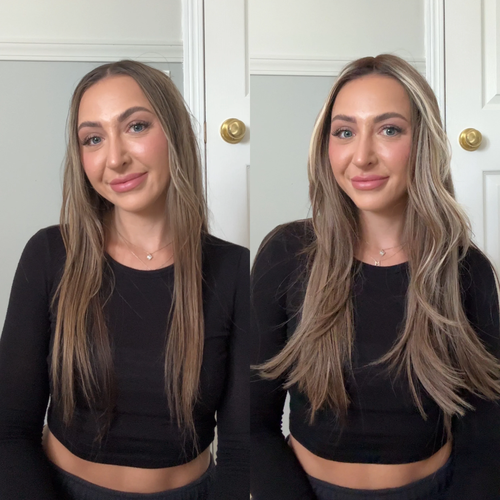
7” x 8” Courtney Mono Top Human Hair Topper in 20’’
Conclusion
When selecting the ideal length for your hair topper, consider more than just inches; consider balance, blending, and even your lifestyle. The natural look often results from opting for a length similar to your own, then slightly extending that to suit your needs.
The three most important takeaways would be:
12”–14”: short and natural everyday look
16”: safest and most popular choice
18”–20”: long, glamorous styling option
The right length should make you feel like your hair—just fuller, softer, and more confident.
Leave a reply